


Chris Orzechowski – Chad-Vertising 101
Original price was: $297.00.$23.00Current price is: $23.00.
| Delivery: | |
| Download Link: | Hot & Fresh – new releaseStream it online right away. Download link available 14 days after purchase. |
| Size: | 569.9 MB |
| Files: | View Files |
| Sale Page: | Link |
| Archive: | Link |
Product is NOT a part of the Membership
Sold separately
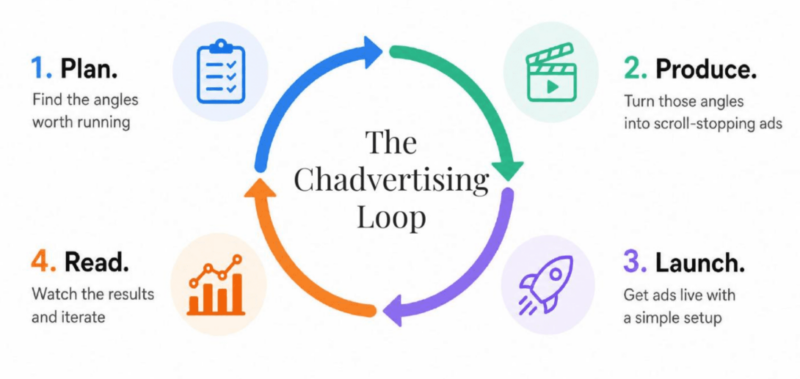
Here’s What You Get:
Learn a simple, AI-powered, repeatable system for finding good ad angles, making the creative, launching your campaigns, and turning ad spend into profit… so you can finally acquire customers and clients like clockwork.
Here’s everything you get:
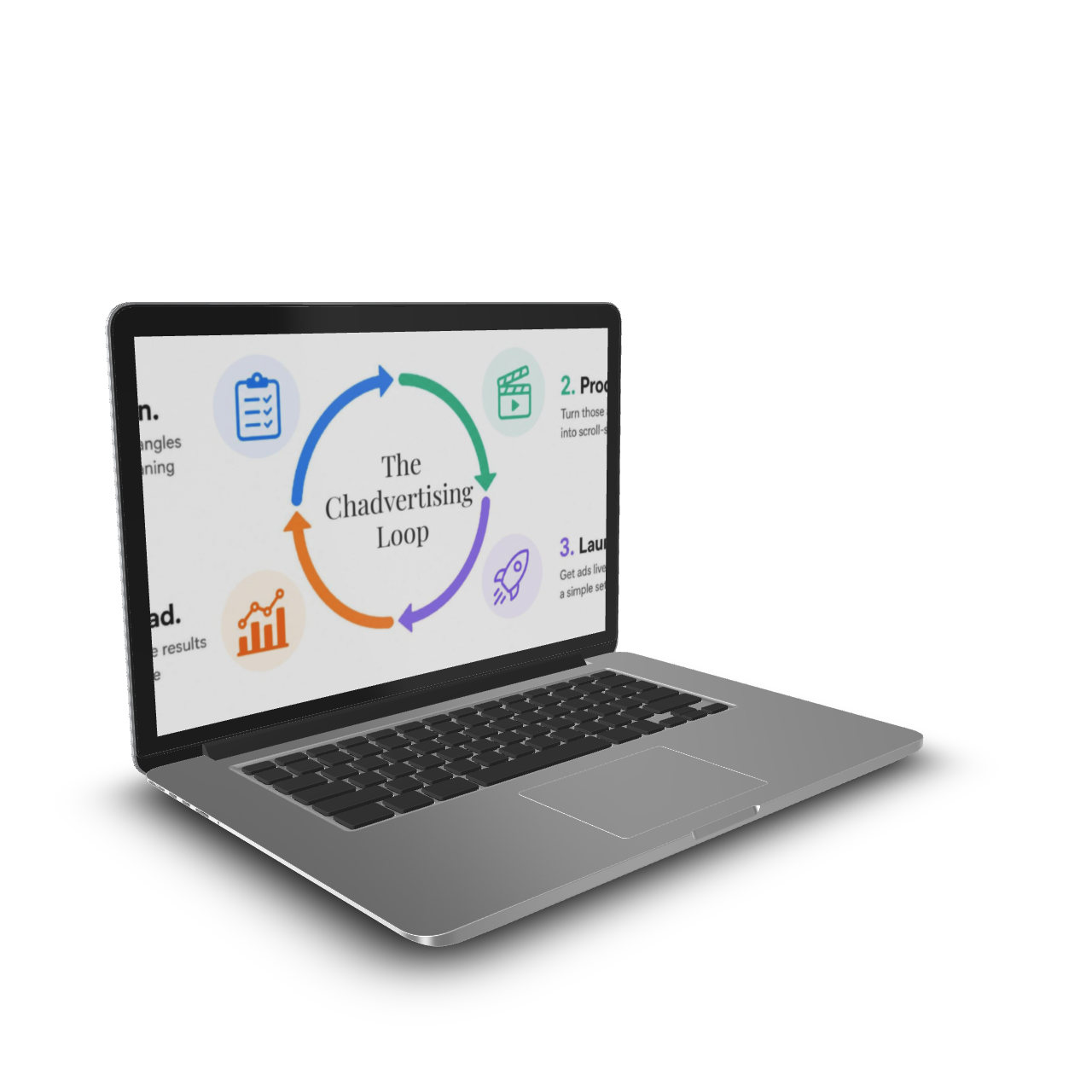
- A seat at Chad-Vertising 101, live with Colin and me on October 27th, 2026. We’ll walk through the entire Chadvertising Loop and make ads right in front of you, so you can follow the same process for your own product or client.
- The recordings. Can’t make it live? Watch the whole thing on your own time, as long as you grab your ticket before the workshop.
- The exact AI research prompt we use to build a detailed brief on your product, covering buying triggers, objections, customer personas, and competitive gaps
- Our angle-mapping process for turning one product into 45 potential creative directions before you’ve even picked an image or video format
- The five elements we look for in a strong static ad, plus video frameworks for problem-agitate-solution ads, customer-style talking heads, hook-and-demo ads, and founder videos
- AI workflows for the creative: generating banger headlines and hooks, and spotting the formats and conversations already getting attention in your niche
- Our campaign structure for keeping new creative tests separate from your proven winners, along with how we handle budgets, conversion events, broad targeting, and exclusions
- Our rules for reading the numbers, including how much data to collect before judging a new ad, when a winner earns its spot in the scaling ad set, how to spot creative fatigue, and why turning off your “worst” ad can backfire
- The “Breakdown Effect”: why the ad showing a 4.5X ROAS isn’t automatically the one that deserves more of your money
- How to automate the analysis with AI, so you can stop spending hours a week in Ads Manager and get back to running your business
1. Plan: Use AI to find the angles worth spending money on
Good ad ideas get a lot easier to find when you know what you’re looking for.
We’ll show you how to use AI to research a product, understand why people buy it, and develop a list of angles you can test.
Including:
- The exact AI research prompt for digging into your market. Colin will walk you through using it to uncover buying triggers, objections, competitive gaps, and customer language buried in reviews and online conversations—and organize those findings into a detailed research brief for your product.
- How to find the small, specific moments that make people want your product. The thing that happened at breakfast. The frustrating conversation. The problem they’ve tried to fix three times already. You’ll see how to direct the research toward these moments so you have something far more interesting to write about than a list of product features.
- How to identify different buyers for the same product. Use the research to understand what each person wants, fears, and needs to believe before they’ll buy—then develop messages that speak to those differences.
- How to map one product into 45 potential creative directions… before you’ve even picked an image or video format. So when you need a fresh batch of ads, you have somewhere useful to start.
The goal is to sit down with the research organized and a clear idea of what you’re making and who it’s for.
That alone can save you a whole lot of staring at a blank screen.
2. Produce: Turn those angles into ads
Next, we’ll show you how to take the research and make something people will actually see in their feed.
We’ll cover both static images and video, with examples so you can see how the pieces fit together.
You’ll learn:
- The five elements we look for in a strong static ad. Including how to make the image and copy work together, communicate a specific promise, and make sense to someone who has never heard of your business.
- How to write in the language your customers already use. Put the phrases and insights from your research to work so your ad sounds like it understands their problem instead of sounding like it escaped from a corporate PowerPoint.
- Video frameworks you can use to structure your next ad. We’ll cover things like problem-agitate-solution ads, customer-style talking head videos, hook-and-demo ads, founder videos, and more.
- How to use AI to analyze the organic content getting attention in your market. Study the hooks, formats, calls to action, and conversations people are responding to—then use those observations to develop fresh creative ideas for your own business.
We’ll also walk through making ads during the workshop.
You’ll see how we move from the research to an angle to the actual creative, so you can follow the same process for your own product or client.
3. Launch: Get the ads live with a setup you can manage
Once you’ve made the ads, they need somewhere to go.
We’ll walk you through a straightforward campaign structure with a place to test new concepts and a place for your proven winners.
Specifically:
- How to organize your campaigns so you can tell what’s happening. Including how we separate new creative tests from the ads that have earned their place in the scaling ad set.
- How to group new ads into useful testing batches. So you can learn something from the money you spend and use that information to plan the next round.
- How we approach budgets, conversion events, and broad targeting. Plus, the customer and audience exclusions we consider when setting up acquisition campaigns.
You’ll be able to see the structure and understand the job each part is doing.
Which makes managing it a whole lot easier.
4. Read: Figure out what to do next
This is where you can save yourself a lot of money and aggravation.
Because a number in Ads Manager can look pretty convincing.
Especially when you’re staring at it with your finger hovering over the “off” switch.
We’re going to show you how to put those numbers in context.
Including:
- How to get off the ROAS roller coaster. What to look at over a longer window so one ugly afternoon doesn’t convince you to tear apart your entire account.
- How much data to collect before judging a new ad. And how to use your target cost per acquisition to make that decision.
- When an ad has earned the right to move from testing into scaling. What we look for before promoting a winner.
- How to spot creative fatigue. The combination of signals that tells you it’s time to bring in fresh ads.
- Why turning off your “worst” ad can backfire. How different ads can serve different roles in the customer journey—and what to examine before deciding an ad is useless.
- Why the ad showing a 4.5X ROAS isn’t automatically the one you should throw more money at. We’ll explain the “Breakdown Effect” and why comparing two ROAS numbers can lead you to the wrong conclusion.
- How to automate all of this with AI. So you can stop spending hours a week in ads manager and get back to running your business
The goal is to look at your account and make a calm, informed decision.
Then close the tab and get on with your day.
That’s how the pieces fit together.
AI takes on time-consuming research and analysis.
The creative frameworks give you ways to turn that information into ads.
The campaign structure keeps your tests organized.
And the decision process helps you figure out your next move.
You have a system you can work through each week.
Related products
Email Marketing

Product For Sale
Erika Kullberg – Mastering YouTube for the Busy Professional